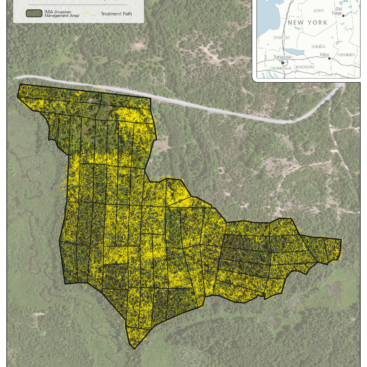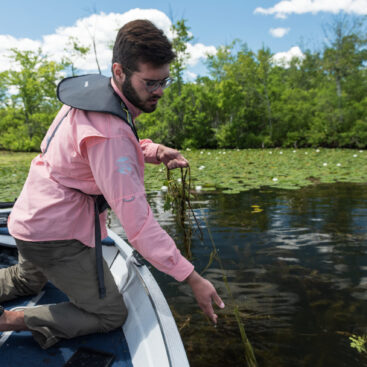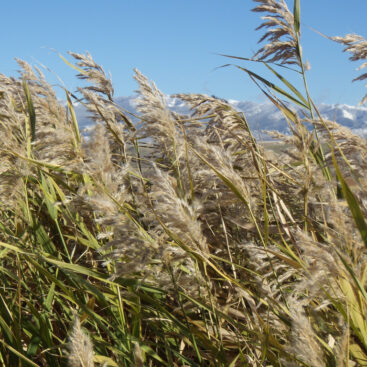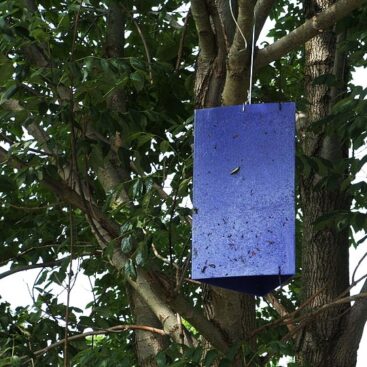
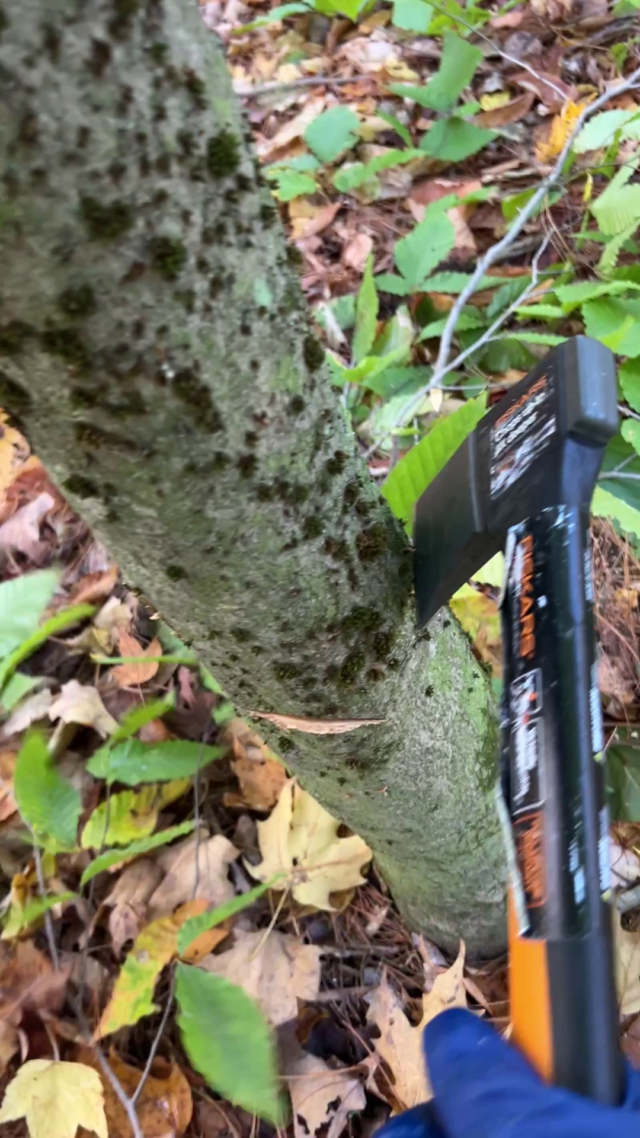
Chemical vegetation management focused on hack-and-squirt of American beech and common buckthorn across 118 acres of forest at Fort Drum. An additional 80 acres was treated via hack-and-squirt and foliar spray to manage American beech and other undesirable woody species.
American beech can become an undesirable species in managed forest systems when it forms dense understory thickets that suppress regeneration of desired tree species. At Fort Drum, this condition is common in previously harvested areas, where beech root sprouting has resulted in high-density regeneration that limits forest diversity and habitat quality.
The project required coordination of the crew, treatment schedules, and installation access with the operational requirements of an active military installation. Treatment records, specifically GPS-based field information and maps identify where work was performed and provide a basis for future vegetation management. Work included application of herbicides by certified commercial applicators following strict compliance with safety requirements. Vegetation management exceeded a 90% kill rate.
Project details
Client: U.S. Army
Location: Fort Drum, New York
Acreage: ~200 acres
Year: 2026